
How Are Surgical Blades Manufactured? A Complete Surgical Blade Production Process
Surgical blades require accurate dimensions, consistent hardness, excellent surface quality, and a sharp cutting edge. Their production therefore involves several controlled manufacturing and inspection processes.
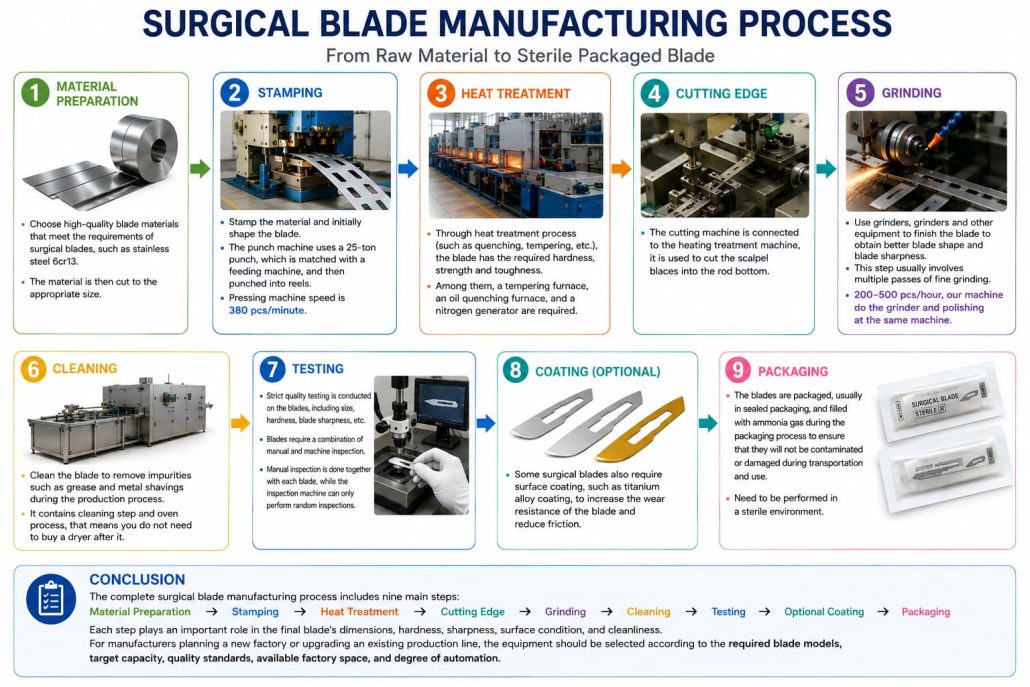
A complete surgical blade production line generally includes material preparation, stamping, heat treatment, grinding, polishing, cleaning, testing, optional coating, and packaging. The following article explains these steps in their original production order.

1. Material Preparation
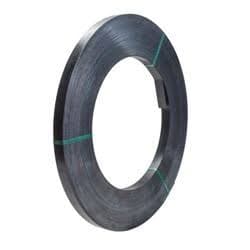
The first step is to select a suitable raw material for manufacturing surgical blades.
High-quality stainless steel, such as 6Cr13 stainless steel, may be selected according to the blade design and the manufacturer’s quality requirements. The stainless steel material is normally supplied in coils or strips.
Before production begins, the material should be checked for:
- Material grade
- Strip thickness
- Strip width
- Surface condition
- Chemical composition
- Mechanical properties
The stainless steel strip is then prepared in the appropriate dimensions for the subsequent stamping process.
Stable raw-material quality is important because material thickness, hardness, and surface condition can directly affect stamping accuracy, heat treatment, grinding, and final blade performance.
2. Stamping and Initial Blade Forming
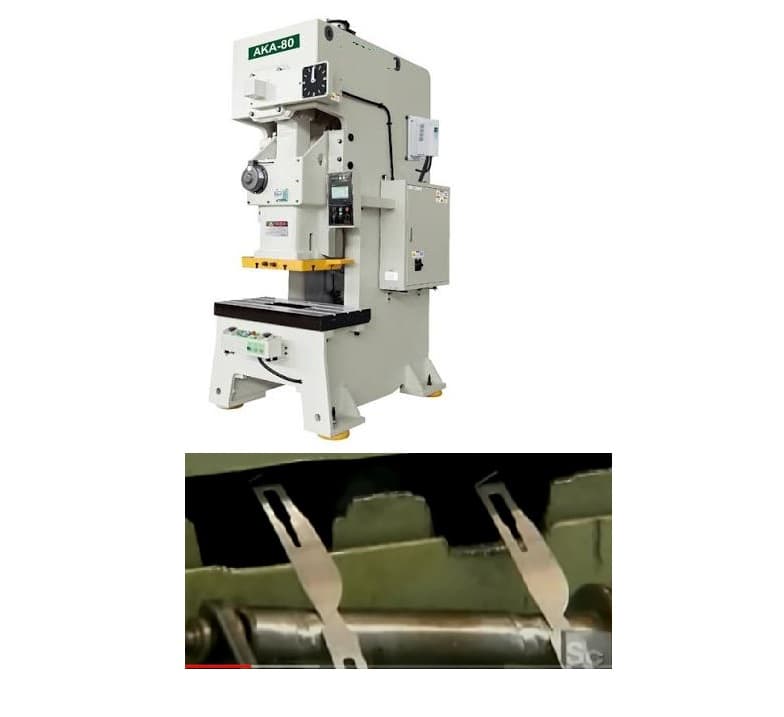
The prepared stainless steel strip is fed into a surgical blade stamping machine.
A feeding machine continuously delivers the coiled material to a 25-ton stamping press. The stamping die cuts and forms the basic blade profile, including the outer shape and the connection slot used for mounting the blade onto a scalpel handle.
The blade blanks remain connected to the strip after stamping so that they can be transported continuously through the following processes.
The specified stamping speed is approximately:
380 pieces per minute
This high-speed stamping process provides the initial blade geometry and supports large-volume surgical blade manufacturing.
The accuracy of the stamping die is important because dimensional errors at this stage may affect:
- Blade shape
- Handle connection
- Grinding position
- Cutting-edge consistency
- Final assembly performance
3. Heat Treatment
After stamping, the blade blanks enter the heat treatment process.
Heat treatment gives the stainless steel blades the required combination of:
- Hardness
- Strength
- Toughness
- Wear resistance
- Cutting-edge stability
The process includes quenching, rapid cooling, and tempering.
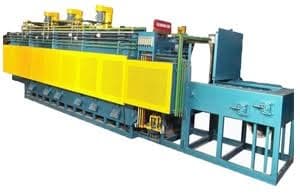
The production line described in the original process uses:
- A quenching furnace
- Two cooling plates
- A tempering furnace
- An unwinding system
- A winding system
- A nitrogen generator or ammonia-decomposition system
- A cooling system
- A demagnetizer
The quenching temperature is approximately:
1080–1090°C
The tempering temperature is approximately:
220–240°C
Two cooling plates are installed between the quenching furnace and the tempering furnace. The rapid change from a high temperature to a lower temperature helps the stainless steel obtain the required hardness.
The total heat treatment line is more than 18 meters long, including approximately seven meters for one furnace section, six meters for another section, the cooling plates, and the winding and unwinding equipment.
A 15–20 kW chiller or cooling tower is recommended to support temperature control.
The system may also include:
- Nitrogen generator capacity: approximately 5 m³/hour
- Nitrogen generator power: approximately 8 kW
- Ammonia-decomposition unit power: approximately 7.5 kW
- Total line power: approximately 125 kW
The stainless steel heating elements inside the quenching and tempering furnaces require periodic replacement. Under normal operating conditions, replacement may be required approximately once a year.
A demagnetizer is also included because the stainless steel strip or cooling plates may gradually develop residual magnetism after stamping, annealing, or extended production.
5. Cutting and Forming
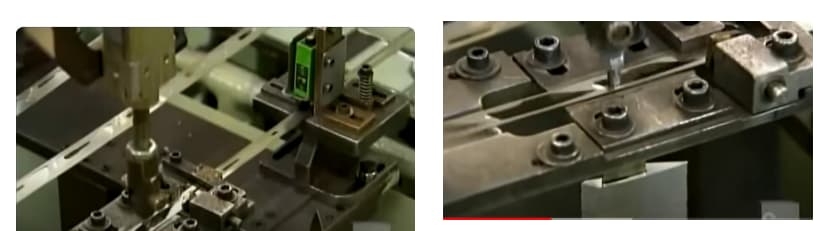
Following heat treatment, the hardened blade strip is transferred directly to the Cutting and Forming Machine. This machine separates individual surgical blades from the strip while precisely forming the mounting base that connects the blade to the scalpel handle.
High-precision cutting ensures consistent blade dimensions, while accurate forming guarantees reliable assembly with different surgical handle models. By integrating directly with the heat treatment line, the machine improves production efficiency, reduces manual handling, and maintains stable product quality throughout the manufacturing process.
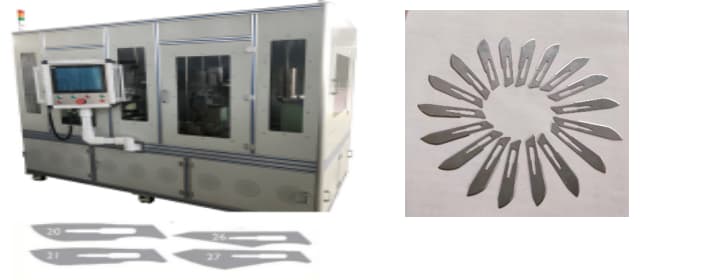
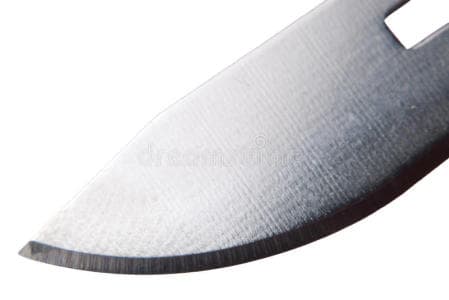
6. Grinding the Cutting Edge
After heat treatment, the surgical blades enter the grinding process.
Grinding forms and sharpens the cutting edge. This step normally requires several controlled grinding passes to produce the required blade angle, edge profile, and sharpness.
The grinding machine must accurately control:
- Blade position
- Grinding angle
- Grinding depth
- Abrasive-wheel speed
- Feeding speed
- Grinding pressure
- Cooling-fluid supply
The production capacity of the grinding equipment is approximately:
200–500 pieces per hour
The actual speed depends on the blade model, cutting-edge geometry, grinding passes, and quality requirements.
In the described production solution, grinding and polishing can be performed on the same machine. This integrated design reduces product transfer, saves floor space, and improves consistency between the two processes.
Different surgical blade models require different grinding programs and fixtures. Proper tooling and parameter control are therefore essential for maintaining uniform blade geometry.
6. Cleaning
After grinding and polishing, the surgical blades must be thoroughly cleaned.
The cleaning process removes contaminants generated during manufacturing, including:
- Grinding oil
- Polishing residue
- Metal particles
- Grease
- Dust
- Other production impurities
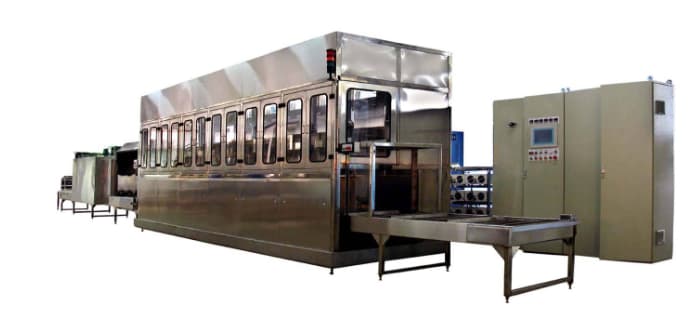
The described surgical blade cleaning machine includes both a cleaning section and an oven-drying section.
Because drying is integrated into the cleaning system, the manufacturer does not need to purchase a separate drying machine.
An integrated cleaning and drying process provides several advantages:
- Reduced equipment investment
- Less product handling
- Lower contamination risk
- Improved production continuity
- Consistent drying results
Cleaning quality is especially important before testing, coating, and packaging because residual oil or metal particles may affect product appearance, coating adhesion, packaging cleanliness, and final quality.
7. Quality Inspection
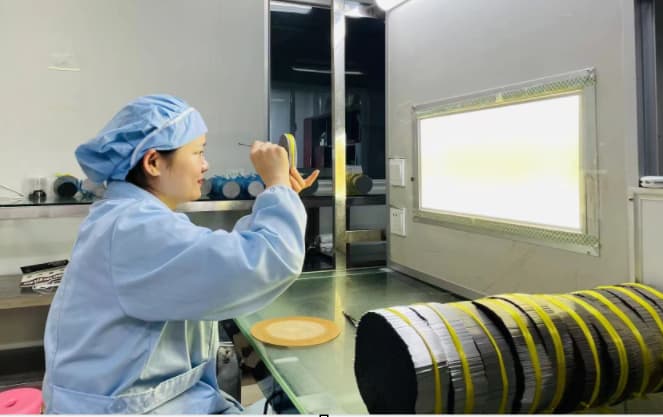
Quality inspection is an essential step in the surgical blade manufacturing process to ensure that every finished blade meets the required quality standards before packaging.
Depending on the customer’s production requirements, quality inspection can be performed in two ways.
The first method is manual visual inspection, where operators inspect each blade for defects such as surface imperfections, incorrect blade shape, edge damage, burrs, or other visible abnormalities.
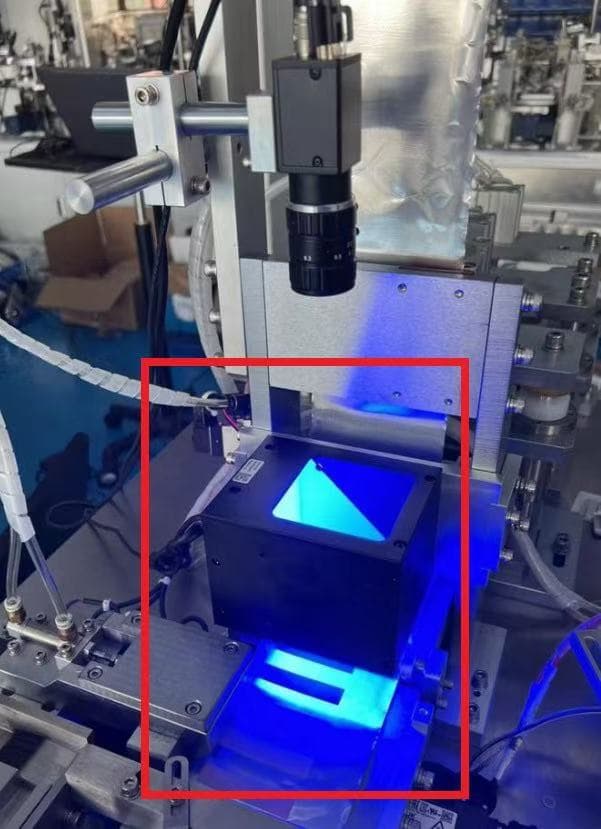
For manufacturers requiring higher automation, the packaging machine can be equipped with an industrial vision system. Before each blade is sealed into its package, the camera automatically inspects critical features, including:
- Blade position
- Blade profile
- Cutting edge
- Surface appearance
- Mounting slot
- Assembly orientation
If any defect is detected, the packaging machine automatically rejects the defective blade before packaging. This integrated inspection and rejection system enables 100% online inspection, eliminates defective products from entering the finished goods, and reduces manual inspection costs.
By combining automated vision inspection with the packaging process, manufacturers can improve production efficiency, enhance product consistency, and achieve a higher level of quality assurance while maintaining continuous production.
8. Packaging
The final production step is surgical blade packaging.
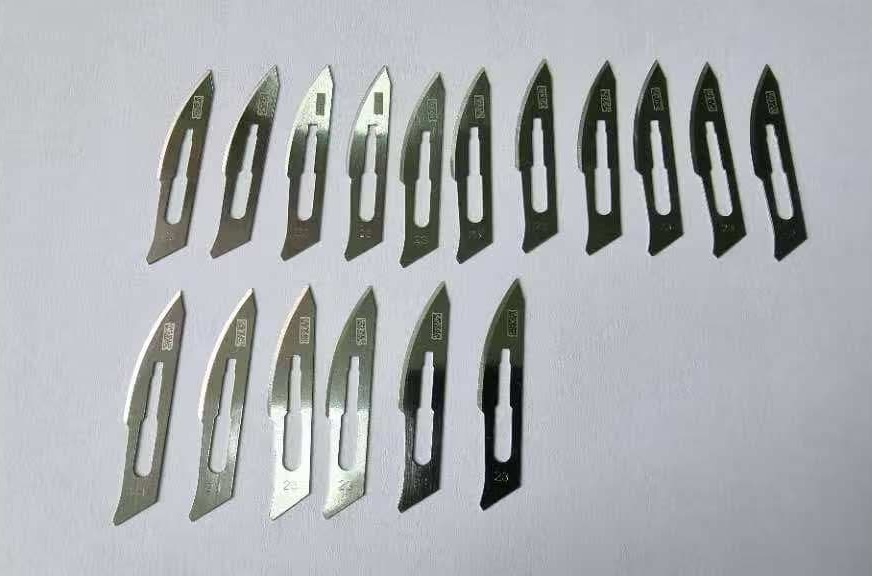
The blades are normally placed into individual sealed packages to protect them from contamination and physical damage during storage, transportation, sterilization, and use.
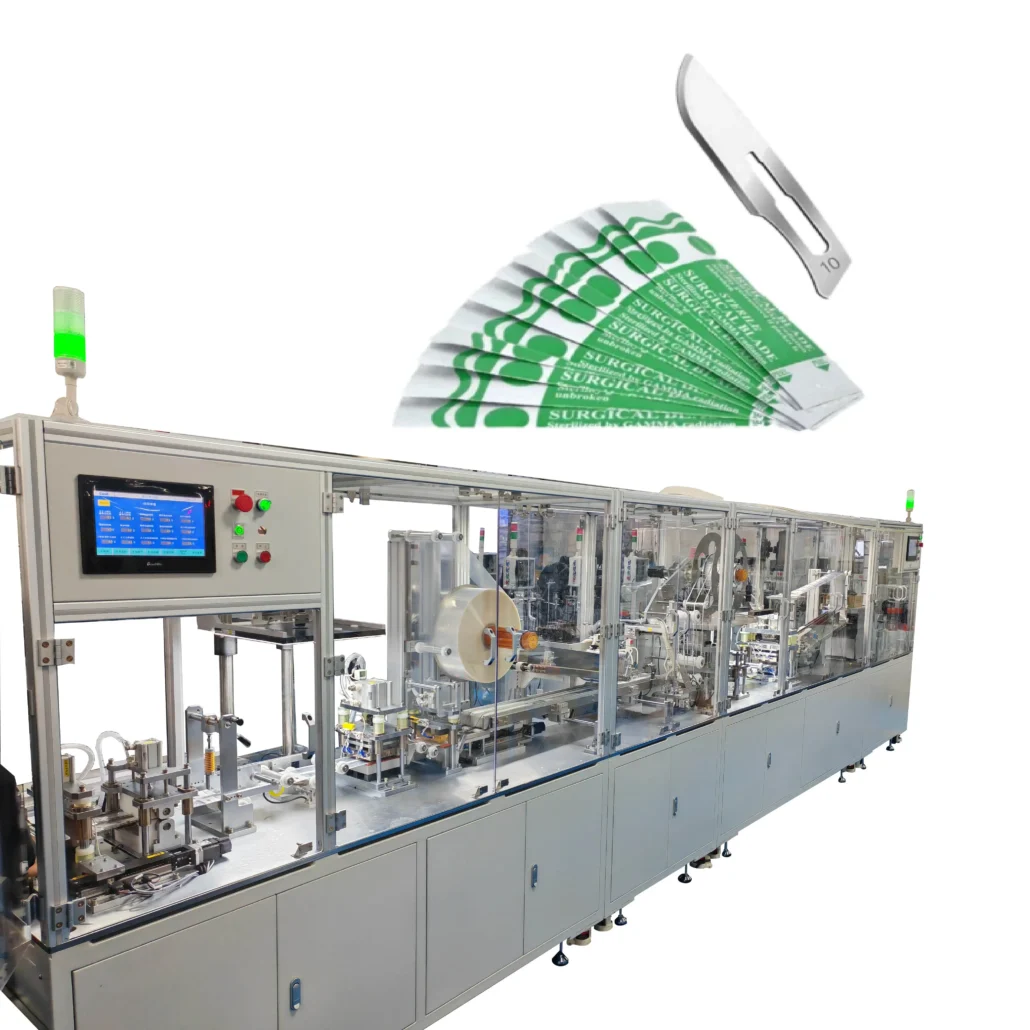
The packaging process may include:
- Automatic blade feeding
- Packaging-material feeding
- Blade positioning
- Printing of batch information
- Package forming
- Sealing
- Cutting
- Finished-package output
The packaging machine should provide stable blade positioning and consistent sealing quality. Packaging is generally carried out in a controlled clean environment according to the manufacturer’s quality and regulatory requirements.
Why Is Surgical Blade Manufacturing Difficult?
Surgical blade production is not simply a stamping and sharpening process. Each manufacturing stage affects the following stage.
For example, inaccurate stamping may result in incorrect grinding positions. Unstable heat treatment may produce inconsistent hardness. Improper grinding may change the blade angle, while insufficient cleaning may affect coating or packaging quality.
A reliable surgical blade production line must therefore maintain consistent control over:
- Raw-material quality
- Stamping precision
- Heat treatment temperature
- Cooling conditions
- Grinding angle
- Blade sharpness
- Surface cleanliness
- Inspection standards
- Packaging integrity
Combining stable machinery with appropriate process parameters and quality inspection helps manufacturers achieve repeatable production and consistent surgical blade quality.
Conclusion
The complete surgical blade manufacturing process includes nine main steps:
Material Preparation → Stamping → Heat Treatment→ Cutting Edge → Grinding → Cleaning → Testing → Optional Coating → Packaging
Each step plays an important role in the final blade’s dimensions, hardness, sharpness, surface condition, and cleanliness.
For manufacturers planning a new factory or upgrading an existing production line, the equipment should be selected according to the required blade models, target capacity, quality standards, available factory space, and degree of automation.
Automatic Surgical Blade and Handle Assembly Machine
In addition to surgical blade manufacturing equipment, our company also provides an Automatic Surgical Blade and Handle Assembly Machine. The machine can be customized for handles of different sizes and lengths, allowing multiple surgical scalpel models to be produced on the same equipment.
During production, an automatic feeding system transports the scalpel handles into precision fixtures. The surgical blades are then picked up and positioned onto the handles. The machine presses the blade and handle together under controlled pressure to create a secure connection.
After pressing, a camera inspection system checks whether the pressing height is correct and whether the pressed profile meets the required shape. Products with incorrect assembly height or appearance can be identified automatically.
The machine then feeds plastic protective covers into the assembly station. Rust-prevention paper is inserted into each plastic cover before the cover is assembled with the finished surgical scalpel. A second camera inspection verifies that the blade, handle, rust-prevention paper, and protective cover have all been assembled in the correct positions.
Finally, a robotic handling system transfers the completed surgical scalpels into a container specified by the customer.
The complete assembly process includes:
Handle Feeding → Blade Pick-up → Blade and Handle Pressing → First Camera Inspection → Protective Cover Feeding → Rust-Prevention Paper Insertion → Cover and Scalpel Assembly → Final Camera Inspection → Robotic Collection
This automated solution reduces manual handling, improves assembly consistency, and provides reliable quality control for the production of surgical scalpels with different handle dimensions and lengths.
